
• Skip to primary navigation
  • Skip to main content
Dean Dorton – CPAs and Advisors
  • Services
        • Audit & Assurance
          • Audits, Reviews & Compilations
          • ESG Programs & Reporting
          • Internal Audit
          • International Financial Reporting
          • Lease Accounting Managed Services
          • Peer Review Services
          • SOC Reporting
        • Consulting & Advisory
          • Business Valuation Services
          • Forensic Accounting
          • Litigation Support
          • Matrimonial Dissolution
          • Merger & Acquisition
          • SEC Services
          • Succession Planning
          • Transaction Advisory Services
          • Whistleblower Hotline
        • Family Office
        • Healthcare Consulting
          • Finance
          • Health Systems Operational Transformation
          • Medical Billing and Credentialing
          • Risk Management & Compliance
          • Strategy and Strategy Implementation
          • Technology & Data Analytics
        • Outsourced Accounting
        • Private Wealth
        • Tax
          • Business Tax
          • Cost Segregation Studies
          • Credits and Incentives
          • Estates and Trusts
          • Individual Tax
          • International Tax
          • SEC Provision and Compliance
          • State and Local Tax
        • Technology & Cybersecurity
          • Accounting Software
          • Cybersecurity
            • Cybersecurity Assessments
            • Cybersecurity Scorecard Assessment
            • Security Awareness Training
            • Virtual Information Security Office
          • Data Analytics & AI
          • IT Audit & Compliance
            • Cybersecurity Maturity Model Certification (CMMC)
            • Data Privacy Laws
            • SOC Reporting
          • IT Infrastructure & Cloud Solutions
            • Automation
            • Backup and Disaster Recovery
            • Cloud Strategy
            • Data Center
            • Enterprise Network
            • Network Security
            • Phone and Video Conferencing
            • User Identity Management Solutions
            • Webex
          • Managed IT Services
  • Industries
        • Construction
        • Distilleries and Craft Breweries
        • Energy and Natural Resources
        • Equine
        • Financial Institutions
        • Government
        • Healthcare
          • Finance
          • Health Systems Operational Transformation
          • Risk Management & Compliance
          • Medical Billing and Credentialing
          • Strategic Growth for Private Practices
          • Strategy and Strategy Implementation
          • Technology & Data Analytics
        • Higher Education
        • Life Sciences
        • Manufacturing and Distribution
        • Nonprofit
        • Real Estate
  • Insights
    • Articles
    • Guides
    • Case Studies
  • Events
  • Company
        • News
        • Our Team
        • Experiences
        • Careers
          • College Students
          • Experienced Professionals
        • Locations
        • Lexington, KY

          250 West Main Street
          Suite 1400
          Lexington, KY 40507
          859-255-2341

        • Raleigh, NC

          4130 Parklake Avenue
          Suite 400
          Raleigh, NC 27612
          919-782-9265

        • Cincinnati, OH

          9987 Carver Rd
          Suite 120
          Blue Ash, OH
          45242 513-891-5911

        • Lexington, KY

          435 North Whittington Parkway
          Suite 400
          Louisville, KY 40222
          502-589-6050

        • Ft. Wright, KY

          810 Wright’s Summit Parkway
          Suite 300
          Fort Wright, KY 41011
          859-331-3300

        • Indianapolis, IN

          5975 Castle Crk Pkwy Dr N
          Suite 400
          Indianapolis, IN 46250
          317-469-0169

  • Contact Us

Asset

Article 12.15.2016 Dean Dorton

Most assets of which we are the sole owner pass at death according to the terms of our will and beneficiary designations of retirement plans and life insurance.

In a real example from a dispute that went all the way to the U.S. Supreme Court, a daughter had an “unpleasant” outcome when her father passed way. Her father’s ex-wife was awarded $400,000 from his retirement plan even though she had waived any interest in the plan in the divorce and property settlement agreement.

What happened? The father failed to update his beneficiary designation form to name his daughter as beneficiary. When he died seven years after the divorce, his former wife was still named as the beneficiary upon his death. The employer’s plan document stated that beneficiaries could only be changed by submitting the required form. The Court held that the administrator of an ERISA-covered benefit plan need only look to the governing plan documents to determine the proper plan beneficiary.

This case reminds us of some very important points:

  • Do not rely on documents such as a divorce decree, property settlement agreement, or a will to name beneficiaries of life insurance policies, retirement plans, 529 college savings plans, and annuities. Determine the currently named beneficiary for all such assets and, if you want the designation to be changed, obtain the proper forms to change your beneficiary designation and complete and properly submit the forms. Keep copies of the completed forms with your will and other testamentary documents.
  • Divorce is not the only situation where failing to update your beneficiaries can cause problems for intended heirs. You may want certain benefits to go to specific children. Their financial or medical situations may have changed. Remind yourself to do an annual “check-up” to review beneficiaries. This should include primary and contingent beneficiaries. It is important to include a secondary beneficiary in case the primary beneficiary predeceases you.
Please contact Missy DeArk at mdeark@deandorton.com if you have questions about this important topic.

Filed Under: Accounting & Tax, Services, Wealth & Estate Planning Tagged With: Asset, Beneficiary, Death, Divorce, Insurance, retirement

Article 12.5.2016 Dean Dorton

In order to take advantage of two important depreciation tax breaks for business assets, you must place the assets in service by the end of the tax year. So you still have time to act for 2016.

Section 179 deduction

The Sec. 179 deduction is valuable because it allows businesses to deduct as depreciation up to 100% of the cost of qualifying assets in year 1 instead of depreciating the cost over a number of years. Sec. 179 can be used for fixed assets, such as equipment, software and leasehold improvements. Beginning in 2016, air conditioning and heating units were added to the list.

The maximum Sec. 179 deduction for 2016 is $500,000. The deduction begins to phase out dollar-for-dollar for 2016 when total asset acquisitions for the tax year exceed $200,000,000.

Real property improvements used to be ineligible. However, an exception that began in 2010 was made permanent for tax years beginning in 2016. Under the exception, you can claim a Sec. 179 deduction of up to $500,000 for certain qualified real property improvement costs.

Note: You can use Sec. 179 to buy an eligible heavy SUV for business use, but the rules are different from buying other assets. Heavy SUVs are subject to a $25,000 deduction limitation.

First-year bonus depreciation

For qualified new assets (including software) that your business places in service in 2016, you can claim 50% first-year bonus depreciation. (Used assets don’t qualify.) This break is available when buying computer systems, software, machinery, equipment, and office furniture.

Additionally, 50% bonus depreciation can be claimed for qualified improvement property, which means any eligible improvement to the interior of a nonresidential building if the improvement is made after the date the building was first placed in service. However, certain improvements aren’t eligible, such as enlarging a building and installing an elevator or escalator.

Contemplate what your business needs now

If you’ve been thinking about buying business assets, consider doing it before year end. This article explains only some of the rules involved with the Sec. 179 and bonus depreciation tax breaks. Contact us for ideas on how you can maximize your depreciation deductions.

Filed Under: Accounting & Tax, Services, Tax Tagged With: Asset, Bonus, Business, Clery Act, Depreciation, SUV, Tax

Article 08.24.2016 Dean Dorton

As a result of FASB’s project to enhance the usability of Not-for-Profit (NFP) entities financial statements and the associated notes to those financial statements, FASB released ASU 2016-14, Not-for-Profit Entities (Topic 958): Presentation of Financial Statements of Not-for-Profit Entities.

This update seeks to:

  • Address the complexity of the three net asset classes
  • Improve transparency in relation to liquidity issues
  • Create consistent guidelines for the presentation and disclosure of expenses
  • Simplify the statement of cash flow presentation requirements.

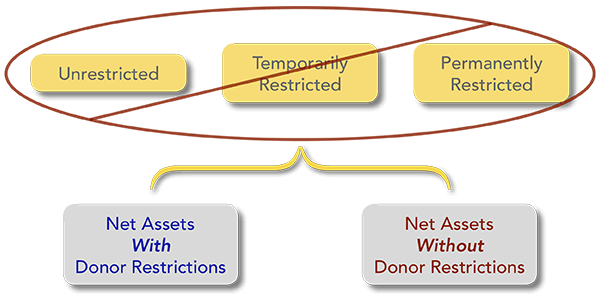
The current net asset classifications have been eliminated and replaced by two new classes:

Investment returns will now be presented net of expenses and the requirement to disclose those netted expenses has been eliminated. NFP entities using the direct method cash flow statements are no longer required to reconcile the direct method to the indirect method. For gifts received to acquire or build long-lived assets, entities will now be required to use the “Placed-in-Service” method to report the expiration of gift restrictions and will need to reclassify any such amounts for assets previously placed in service. The new guidelines require NFPs to present both the natural and functional classification of expenses in the same location.

Additional disclosure requirements are as follows:

  1. Disclosure of the amounts and purposes of self-imposed restrictions or limitations on assets without donor imposed restrictions.
  2. Disclosures of the composition of donor restricted net assets and how those restrictions affect their use.
  3. Qualitative information on management’s plan to meet the entity’s cash flow needs for the next twelve months as well as the availability of the assets that will be used to meet those needs.
  4. Disclosure of the methodology used to allocate expenses between program and support functions.
  5. Underwater endowment funds will now require increased disclosure requirements relating to the entity’s policies and actions taken concerning appropriation of such funds, the fair value of the funds, original gift amount to be maintained and the aggregate deficiencies of the funds, which are to be classified as part of net assets with donor restrictions.

Nonprofit organizations that will be affected include charities, foundations, colleges and universities, healthcare providers, religious organizations, trade associations, and cultural institutions, among others.

These changes will be effective for annual statements with fiscal years beginning after December 15, 2017 and for interim periods with fiscal years beginning after December 15, 2018. The amendment is to be applied on a retrospective basis; however, entities presenting comparative statements have the option to omit the increased requirements surrounding the analysis of expenses and liquidity and availability of resources for the period presented prior to adoption.

Authored by Tom Smither, Supervisor of Assurance Services.

For additional information, please contact your Dean Dorton advisor or:
Crissy Fiscus, cfiscus@deandorton.com
David Richard, drichard@deandorton.com

Filed Under: Healthcare, Higher Education, Industries, Nonprofit & Government Tagged With: Asset, college, donor, FASB, Healthcare, Higher Education, Invest, nonprofit, not-for-profit, University

Article 05.13.2016 Dean Dorton

Business owners naturally are interested in the value of their businesses. In this article, we provide a brief description of the primary approaches to valuing a closely-held business (asset, market, and income approaches), elaborate on the income approach, and offer some brief thoughts on how to increase the value of one’s business.

Under the asset approach, a valuation analyst looks to the underlying assets and liabilities of the business (whether recorded on the company’s balance sheet or not) and aggregates them to arrive at a value of the business. An asset approach is instructive for businesses whose primary value is derived from its financial assets and tangible assets (e.g. inventory, equipment, real estate), but it often fails to adequately capture the value of an entity’s intangible assets (e.g. customer relationships, trade names, patents, assembled workforce, and goodwill, for example) because they often are difficult to separately value.

The market approach relies heavily on comparison and substitution to derive value estimates. Much like a residential real estate appraiser does in valuing houses, a business appraiser attempts to find other businesses (for which there are known trading prices) that are comparable to the business being appraised and then uses those prices to estimate the value of the subject company. Because the values used in this approach are rooted in real-world transactions, this approach often results in the best estimate of fair market value. However, it often is difficult to identify reliable comparable companies or transactions due to the unique features of the subject company and frequent lack of available information about the comparable companies.

Due to limitations of the asset and market approaches, the income approach often is the best approach for valuing closely-held businesses. The income approach reflects that the value of a business is equal to the sum of its future cash flows discounted to present value. It recognizes that a buyer is willing to pay a price today in exchange for future cash flows and a seller is willing to forego future cash flows in exchange for a current price. Employing the income approach requires a forecasted stream of future cash flows and a discount rate with which to convert the future cash flows to present value. The discount rate represents a rate of return investors would require considering risks associated with achieving forecasted cash flows.

To derive an appropriate discount rate, the analyst considers rates of return historically required by investors owning similar businesses, taking into account the unique strengths, weaknesses, opportunities, threats, and risks associated with the subject company relative to those of the similar businesses.

Note that higher cash flows and lower risks yield higher values. Thus, a business owner can increase the value of his business by taking steps to increase cash flows and to reduce risks. Ways to increase cash flows include growing revenues, reducing expenses, optimizing working capital levels, and optimizing the capital structure of the business. Risks can be reduced through customer, supplier, and product diversification, cross-training of employees, management succession planning, geographical expansion, and a host of other initiatives. Each of these strategies requires proactive planning, purposeful implementation, and time to realize the benefits.

If you are considering a sale of your business in the next few years or in increasing its value, please contact one of the members of our forensic accounting and business valuation group.

David Parks, dparks@deandorton.com

John Herring, jherring@deandorton.com

David Angelucci, dangelucci@deandorton.com

View David Parks’ Bio

Filed Under: Business Valuation, Forensic Accounting, Services Tagged With: approach, Asset, Business, David Angelucci, David Parks, discount, Forensic, Income, John Herring, law, litigation, market, value

Article 04.26.2016 Dean Dorton

Question:

If you spend money to change a capital asset used in your business this year, then is the expenditure a capitalized improvement or an expensed repair?

Answer: 

Under the new Tangible Asset Regulations (TARS), you must capitalize all betterment, restoration, and adaptation expenditures as improvements to the unit of property (UOP). The regulations define these three terms as follows:

  1. A betterment is an expenditure that:
  • Corrects a material condition or defect that existed prior to acquisition or arose during production of the UOP,
  • Results in a material addition to the UOP, or
  • Results in a material increase in strength, capacity, productivity, efficiency, quality or output of the UOP.
  1. A restoration is an expenditure that:
  • Replaces a component of a UOP,
  • Repairs damage to a UOP,
  • Returns UOP to its ordinarily efficient operating condition if it deteriorated to a state of disrepair and is no longer functional for its intended use,
  • Rebuilds UOP to a like-new condition after the end of its ADS class life, or
  • Replaces major component or substantial structural part of UOP.
  1. An adaptation is an expenditure that adapts a UOP to a new or different use that is not consistent with the taxpayer’s intended ordinary use of the UOP when originally placed in service by the taxpayer.

Otherwise, the expenditure is a repair, and you can expense it in the current year.

Contact your Dean Dorton advisor or Faith Crump at fcrump@deandorton.com or 502.566.1025 if you have any questions.

Filed Under: Accounting & Tax, Construction, Industries, Real Estate, Services, Tax Tagged With: Asset, Capital, expense, Faith Crump, Improvement, Property, Repair, Tangible asset regulation, TARS, UOP

Article 03.16.2016 Dean Dorton

If your 2015 tax liability is higher than you’d hoped and you’re ready to transfer some assets to your loved ones, now may be the time to get started. Giving away assets will, of course, help reduce the size of your taxable estate. But with income-tax-smart gifting strategies, it also can reduce your income tax liability — and perhaps your family’s tax liability overall:

  1. Gift appreciated or dividend-producing assets to loved ones eligible for the 0% rate. The 0% rate applies to both long-term gain and qualified dividends that would be taxed at 10% or 15% based on the taxpayer’s ordinary-income rate.
  2. Gift appreciated or dividend-producing assets to loved ones in lower tax brackets. Even if no one in your family is eligible for the 0% rate, transferring assets to loved ones in a lower income tax bracket than you can still save taxes overall for your family. This strategy can be even more powerful if you’d be subject to the 3.8% net investment income tax on dividends from the assets or if you sold the assets.
  3. Don’t gift assets that have declined in value. Instead, sell the assets so you can take the tax loss. Then gift the sale proceeds.

If you’re considering making gifts to someone who’ll be under age 24 on December 31, make sure he or she won’t be subject to the “kiddie tax.” And if your estate is large enough that gift and estate taxes are a concern, you need to think about those taxes, too. To learn more about tax-smart gifting, contact us.

Filed Under: Services, Tax Tagged With: Asset, dividend, Gift, gifting, Income, Tax

  • Page 1
  • Page 2
  • Go to Next Page »
PAY INVOICE SUBMIT RFP
  • Services
    • Outsourced Accounting
    • Audit & Assurance
    • Tax
    • Consulting & Advisory
    • Technology & Cybersecurity
    • Family Office
    • Wealth Management
  • Industries
  • Company
  • Locations
  • Careers
  • Insights
  • Events
  • Contact Us
SUBSCRIBE TO INSIGHTS
email Dean Dorton - CPAs And Advisors On Email facebook Dean Dorton - CPAs And Advisors On Facebook twitter twitter linkedin Dean Dorton - CPAs And Advisors On LinkedIn youtube Dean Dorton - CPAs And Advisors On YouTube

The matters discussed on this website provide general information only. The information is neither tax nor legal advice. You should consult with a qualified professional advisor about your specific situation before undertaking any action.

© 2025 Dean Dorton Allen Ford, PLLC. All Rights Reserved

  • Privacy Policy
  • Terms Of Use
  • Accessibility