• Skip to primary navigation
  • Skip to main content
Dean Dorton – CPAs and Advisors
  • Services
        • Audit & Assurance
          • Audits, Reviews & Compilations
          • ESG Programs & Reporting
          • Internal Audit
          • International Financial Reporting
          • Lease Accounting Managed Services
          • Peer Review Services
          • SOC Reporting
        • Family Office
        • Consulting & Advisory
          • Business Valuation Services
          • Forensic Accounting
          • Fractional CFO
          • Litigation Support
          • Matrimonial Dissolution
          • Merger & Acquisition
          • SEC Services
          • Succession Planning
          • Transaction Advisory Services
          • Whistleblower Hotline
        • Outsourced Accounting
        • Private Wealth
        • Healthcare Consulting
          • Finance
          • Health Systems Operational Transformation
          • Medical Billing and Credentialing
          • Risk Management & Compliance
          • Strategic Growth for Private Practices
          • Strategy and Strategy Implementation
          • Technology & Data Analytics
        • Tax
          • Business Tax
          • Cost Segregation Studies
          • Credits and Incentives
          • Estates and Trusts
          • Individual Tax
          • International Tax
          • SEC Provision and Compliance
          • State and Local Tax
        • Technology & Cybersecurity
          • Accounting Software
          • Cybersecurity
            • Cybersecurity Assessments
            • Cybersecurity Scorecard Assessment
            • Security Awareness Training
            • Virtual Information Security Office
          • Data Analytics & AI
          • IT Audit & Compliance
            • Cybersecurity Maturity Model Certification (CMMC)
            • Data Privacy Laws
            • SOC Reporting
          • IT Infrastructure & Cloud Solutions
            • Automation
            • Backup and Disaster Recovery
            • Cloud Strategy
            • Data Center
            • Enterprise Network
            • Network Security
            • Phone and Video Conferencing
            • User Identity Management Solutions
            • Webex
          • Managed IT Services
  • Industries
        • Construction
        • Distilleries and Craft Breweries
        • Energy and Natural Resources
        • Equine
        • Financial Institutions
        • Government
        • Healthcare
        • Higher Education
        • Life Sciences
        • Manufacturing and Distribution
        • Nonprofit
        • Real Estate
  • Insights
    • Articles
    • Guides
    • Case Studies
  • Events
  • Company
        • News
        • Our Team
        • Experiences
        • Careers
          • College Students
          • Experienced Professionals
        • Locations
        • Lexington, KY

          250 West Main Street
          Suite 1400
          Lexington, KY 40507
          859-255-2341

        • Louisville, KY

          435 North Whittington Parkway
          Suite 400
          Louisville, KY 40222
          502-589-6050

        • Louisville, KY

          700 North Hurstbourne Parkway
          Suite 115
          Louisville, KY 40222
          502-589-6050

        • Ft. Wright, KY

          810 Wright’s Summit Parkway
          Suite 300
          Fort Wright, KY 41011
          859-331-3300

        • Cincinnati, OH

          312 Walnut Street
          Suite 3330
          Cincinnati, OH 45202
          859-331-3300

        • Blue Ash, OH

          9987 Carver Rd
          Suite 120
          Blue Ash, OH 45242
          513-891-5911

        • West Chester, OH

          9025 Centre Pointe Drive
          Suite 310
          West Chester, OH 45069
          513-985-6240

        • Indianapolis, IN

          5975 Castle Crk Pkwy Dr N
          Suite 400
          Indianapolis, IN 46250
          317-469-0169

        • Raleigh, NC

          4130 Parklake Avenue
          Suite 400
          Raleigh, NC 27612
          919-782-9265

  • Contact Us

Revenue

Article 06.5.2020 Dean Dorton

Learn how Sage Intacct Dynamic Allocations can help you take ownership of your revenue and expense allocation process.

In this recording, Jim Norton, Senior Technology Consultant at Dean Dorton will share:

  • The mechanics of Sage Intacct Dynamic Allocations
  • Examples of how companies have used this module for powerful, creative use cases
  • How financial statements can look like before and after you use Dynamic Allocations

Anyone who plays a financial management role in their organization including (but not limited to):

  • CFOs/COOs/Controllers
  • VPs and Directors of Finance
  • Accountants, Bookkeepers, Office Managers
  • Presidents, Executive Directors

Resources:
  • Dynamic Allocations Software
  • Blog: Optimize the True Performance of Your Business with Sage Intacct Dynamic Allocations

Filed Under: Accounting Software, Sage Intacct, Services, Technology Tagged With: dynamic allocations, expense allocation, Revenue, Sage Intacct

Article 02.4.2019 Dean Dorton

As we turn the page on 2018, and look forward to the goals and expectations of a new year, many of us will establish resolutions to improve our fitness, diet, and overall personal health. This may include establishing a new exercise plan as well as scheduling preventive check-ups and implementing other wellness programs in our daily lives. We will make concerted efforts to more closely watch our weight, BMI, calorie intake, fitness activity, cholesterol, and the list goes on. This same strategy can be applied to your organization’s revenue cycle.

Below are five key performance indicators that you can monitor to ensure your revenue cycle is performing in accordance with your expectations.

A/R Aging > 90 days

Examine your third party payer A/R aged greater than 90 days from date of service. National benchmarks suggest this should be 15% or less. There could be some variability depending on your payer mix, but if this indicator is significantly greater than 15%, this may be indicative of a sluggish billing and collections process.

Staff performance and productivity

If there are personnel, staffing issues, or general performance concerns within any level of your revenue cycle, address it immediately. Often times, this type of personnel feedback is reviewed only annually, and in some cases, poor performance is tolerated for no good reason. Acknowledge that improvement plans, redesigned roles and responsibilities, or even personnel changes sometimes need to be made to improve results and morale. This extends into leadership roles and contracted vendors.

Cash to charge collections ratio

Review your collections a percentage of your billed charges. High charge months due to increased volumes should equate to increased cash collections in a subsequent period, but take a closer look to understand the collection percentage and not just the dollar amount. Additionally, examine the cash collections as percentage of the prior period’s billed charges to calculate a 30-day lag collection rate. Charge entry, coding, and billing backlogs, as well as staffing shortages can significantly impact your collections rate from month to month. Also, keep a close eye on changes in payer mix as this too, will affect the overall collection rate.

“Backlogs”

Some backlogs within the revenue cycle are inevitable, but they must be monitored and managed accordingly. Keeping these to a minimum and within reasonable ranges are critical to ensuring key performance indicators do not deteriorate. Backlogs related to charge entry, medical coding, claim submission, payment posting, and refunds are of great significance. Establish guard rails for these key tasks and monitor them closely.

Medical coding and documentation

The foundation of each encounter and claim submitted by your organization is the medical documentation and subsequent coding assignment. Changes in physician documentation habits, software upgrades, EHR templates, and coding personnel can impact your outcomes related to coding, and ultimately reimbursement and risk. Evaluate your processes and controls related to auditing medical documentation and coding assignment as well as ongoing provider and team member education to mitigate coding concerns and overall risk. Recurring chart audits can be a helpful tool to better manage potential errors.

Although there are many areas within a revenue cycle that need to be closely monitored, these are five indicators that can be included as part of a successful oversight program. Be committed to monitoring these and identifying potential improvement opportunities within your organization for a successful 2019.

To learn more or for more information, contact Adam Shewmaker, FHFMA, Director of Healthcare Consulting Services at Dean Dorton. ashewmaker@ddafhealthcare.com

Filed Under: Healthcare, Industries, Revenue cycle Tagged With: kentucky roundtable, ky sales tax, Revenue, revenue cycle, revenue cycle roundtable

Article 05.8.2018 Dean Dorton

Improving financial health and sustainability

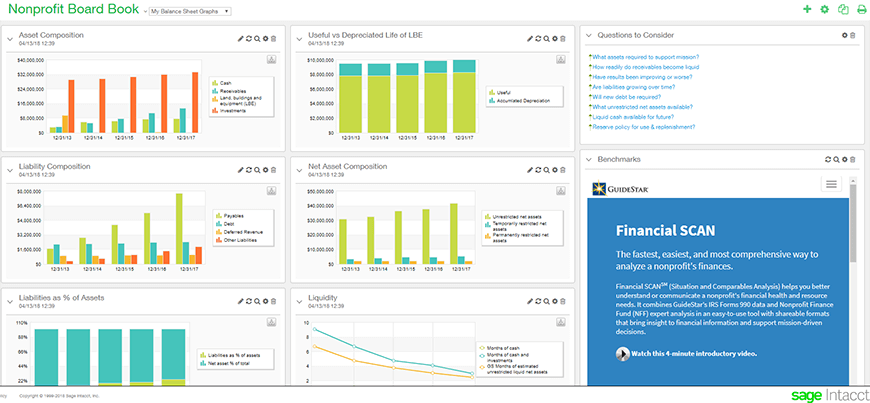
Sage Intacct, the innovation and customer satisfaction leader in cloud financial management, and GuideStar, the world’s largest source of nonprofit information, are working together to improve the financial health and sustainability for nonprofits with innovative new dashboards.

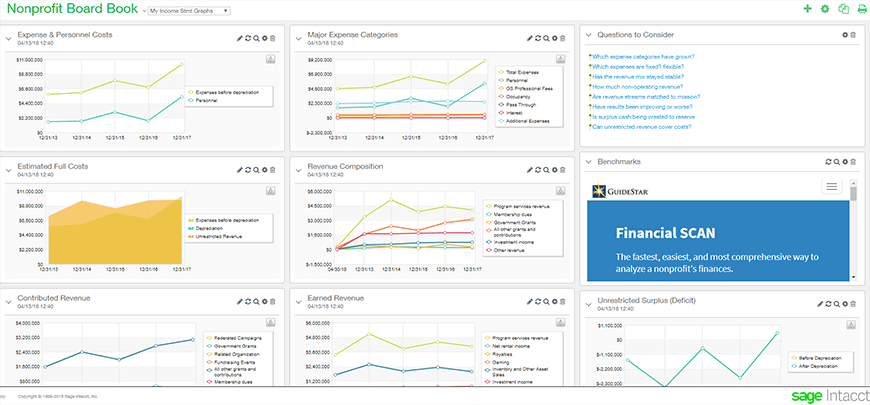
The Nonprofit Financial Board Book is a set of pre-built dashboards that automates the tracking and management of industry-wide best practice metrics to deliver real-time insights to help nonprofit organizations benchmark financial health and sustainability. Report data and dashboards are seamlessly calculated using real-time balance sheet, revenue, and expense data from Sage Intacct, and through additional operational sources from within the organization, including its Donor Management Systems, Budgeting and Planning software, Payroll, and more. The dashboards provide a graphical view of the key data as recommended by GuideStar and in alignment with GuideStar formats.

By incorporating best practices from GuideStar, the dashboards enable nonprofits to more easily keep an eye on their balance sheet performance, funding mix, and the overall composition of key revenue sources to ensure sustainability.

Best practice metrics deliver real-time insights into mission impact

Gain real-time visibility into key revenue composition and source

With real-time visibility, nonprofits gain insight to guide planning and strategy, while strengthening funding stability. The ability to instantly view reserves allows organizations to sustain any short-term gaps and expand funding diversity.

Monitor organization health with key metric visualizations

With access to visuals of key balance sheet metrics that align with GuideStar recommendations, nonprofits can easily track trend lines and changes for a more complete picture of financial health, while informing planning and strategy for proactive management.

Guide discussions with “Questions to Consider” content

Nonprofits gain peace of mind with the “Questions to Consider” capability so no stone goes unturned. With questions to consider covering both the balance sheet and income statement topics, key stakeholders can stay on top of trends and priorities – helping ensure good decision making.

Navigate directly to GuideStar for benchmarking

Nonprofits have a direct connection to GuideStar’s benchmarking tool to ensure alignment with recommended metric and best practices.

Sage Intacct Nonprofit Financial Board Book Powered by GuideStar gives real-time visibility into a nonprofit’s financial health, so that organizations can leverage data for better decision making, Together, Sage Intacct and GuideStar are raising the bar for all nonprofits by making it possible to provide instant, actionable insight to key stakeholders.

Watch the Video

Exclusive partnership with GuideStar

Sage Intacct and GuideStar share a common goal of enabling better financial stewardship and improved mission accomplishment based on a holistic view of the nonprofit organization. We’ve now teamed up through an exclusive relationship to help nonprofits achieve these goals.

“With the Sage Intacct Nonprofit Financial Board Book, organizations can get a more complete picture of their financial health and easily align their efforts with the key metrics GuideStar has identified for nonprofit success. We aim to ensure organizations have the financial capacity to deliver on their missions in an increasingly competitive funding environment.”

Adrian Bordone, VP of Strategic Partnerships for GuideStar

Filed Under: Industries, Nonprofit & Government Tagged With: Board, book, dashboard, Guidestar, intacct, nonprofit, Revenue, Sage Intacct

Article 10.23.2017 Dean Dorton

In an era where reimbursement is shifting towards quality care and patient outcomes, it is necessary for medical practice executives to take a fresh look at their business processes to ensure potential collections are not leaking throughout the revenue cycle.

Most physicians want to see patients, practice medicine, perform care that they were trained to provide and go home. The Administrator or practice executive is typically quite busy addressing staffing concerns, patient complaints, reviewing contracts, and responding to physician inquiries. It takes a great deal of dedicated focus, time, and energy to manage those critical tasks associated with converting patient visits into reimbursement.

It is our experience that many physician practices have really good teams behind the scenes that ensure patient insurance and benefits are accurate, charges are entered timely, and patients are treated in a professional and courteous manner when they have questions about their bills. It is also our experience that most physician practices have team members that are trained or skilled in only a small portion of the back-office responsibilities that are necessary to ensure high patient satisfaction and a profitable outcomes. Far too often, we observe that a practice has only one certified professional coder who is experienced in assigning the appropriate medical codes for their unique patient mix and related services. We hear of employees dreading taking time off from work because they know their wok will go undone in their absence. We see the trend lines associated with staff turnover related to charge entry, cash posting, and A/R follow-up on denials. These little things may seem trivial, but they add up financially over time and they can take a toll on employee morale and productivity.

While there is no single cure for ensuring all revenue is collected all of the time, there are five key areas that we routinely advise our clients to consider in hopes of improving financial performance and mitigating risk within the business office.

Conduct a medical coding and chart documentation review
Almost any practice can greatly benefit from conducting a routine medical coding assessment of its claims. Whether the end result is confirming the appropriateness of your practice’s coding habits or identifying missed revenue or compliance concerns, a coding audit can be one of the most useful tools a practice does to improve performance and ensure consistency between providers.

Analyze patient balance amounts that are being transferred to bad debt
Perhaps no single point of data more clearly demonstrates your practices’ success at collecting patient balances than reviewing what went uncollected and subsequently transferred to your bad debt collection agency. Dean Dorton recommends taking a deeper look at the details of what was transferred to collections for a recent twelve month period. In reviewing this data, look for trends associated with “frequent flyer” patients who rarely make payments or for those “common balance after insurance” amounts, such as $25, $50, and $100 that indicate a potential co-payment or patient financial responsibility amount that went uncollected. Identifying these patients can help the practice better collect them on the front-end.

Identify underpayments
Also known as partial payments or partial denials, an underpayment can be difficult to identify without the use of a contract management system. Too many practices rely on their cash posting team members to identify underpayments and resolve them as appropriate. While that may be an effective approach for some practices, it leaves way too much risk in the hands of a select few employees. A comprehensive approach to underpayment identification and resolution should include resources from information technology, patient accounting, and finance. Top performing practices will reconcile expected reimbursement to actual on a continuous basis to ensure the appropriate payment is being received.

Cross-train business office staff
Most practices cannot afford to have one coder, one Medicare biller, or one person that knows how to post electronic payments. It simply is too significant of a business risk to rely on a small number of employees to complete tasks with great financial consequence. With this type of staffing model and little to no cross-training of staff, backlogs are inevitable. This leads to sluggish cash collections, poor morale, and dependency on a select few. It is critical that business offices cross-train its team members on how to complete multiple tasks and/or contract with service providers to ensure critical tasks are completed when team members are absent.

Be proactive in follow-up efforts
An efficient and high performing business office makes proactive account follow-up a daily routine. Charges must be entered and reconciled daily, payments must be deposited and applied to accounts daily, and unpaid open account balances must be proactively worked on a daily basis. Utilizing work queues or even an aged trial balance, practices’ must identify high value accounts that need follow-up in order to get paid. Working accounts in descending dollar order can have the most significant impact on a practice. Typically, 80% of a practice’s outstanding A/R is comprised of only 20% of the encounter volume. These accounts must get worked as part of the team’s daily responsibilities to ensure strong cash collections.

With the changes we’ve seen in the market due to hospital-physician integration and payer reimbursement, it is critical that practices’ continue to focus on those areas that ensure strong compliance, high patient satisfaction, and positive financial outcomes. Focusing on these five areas are just a small part of ensuring a practice is as effective and efficient it can be in converting patient visits to revenue.

Filed Under: Healthcare, Industries, Revenue cycle Tagged With: code, Coder, Coding, Doctor, executive, Medical, Patient, Revenue

  • Services
    • Outsourced Accounting
    • Audit & Assurance
    • Tax
    • Consulting & Advisory
    • Technology & Cybersecurity
    • Family Office
    • Wealth Management
  • Industries
  • Company
  • Locations
  • Careers
  • Insights
  • Events
  • Contact Us
facebook Dean Dorton - CPAs And Advisors On Facebook twitter twitter linkedin Dean Dorton - CPAs And Advisors On LinkedIn youtube Dean Dorton - CPAs And Advisors On YouTube

The matters discussed on this website provide general information only. The information is neither tax nor legal advice. You should consult with a qualified professional advisor about your specific situation before undertaking any action.

© 2026 Dean Dorton Allen Ford, PLLC. All Rights Reserved