• Skip to primary navigation
  • Skip to main content
Dean Dorton – CPAs and Advisors
  • Services
        • Audit & Assurance
          • Audits, Reviews & Compilations
          • ESG Programs & Reporting
          • Internal Audit
          • International Financial Reporting
          • Lease Accounting Managed Services
          • Peer Review Services
          • SOC Reporting
        • Family Office
        • Consulting & Advisory
          • Business Valuation Services
          • Forensic Accounting
          • Fractional CFO
          • Litigation Support
          • Matrimonial Dissolution
          • Merger & Acquisition
          • SEC Services
          • Succession Planning
          • Transaction Advisory Services
          • Whistleblower Hotline
        • Outsourced Accounting
        • Private Wealth
        • Healthcare Consulting
          • Finance
          • Health Systems Operational Transformation
          • Medical Billing and Credentialing
          • Risk Management & Compliance
          • Strategic Growth for Private Practices
          • Strategy and Strategy Implementation
          • Technology & Data Analytics
        • Tax
          • Business Tax
          • Cost Segregation Studies
          • Credits and Incentives
          • Estates and Trusts
          • Individual Tax
          • International Tax
          • SEC Provision and Compliance
          • State and Local Tax
        • Technology & Cybersecurity
          • Accounting Software
          • Cybersecurity
            • Cybersecurity Assessments
            • Cybersecurity Scorecard Assessment
            • Security Awareness Training
            • Virtual Information Security Office
          • Data Analytics & AI
          • IT Audit & Compliance
            • Cybersecurity Maturity Model Certification (CMMC)
            • Data Privacy Laws
            • SOC Reporting
          • IT Infrastructure & Cloud Solutions
            • Automation
            • Backup and Disaster Recovery
            • Cloud Strategy
            • Data Center
            • Enterprise Network
            • Network Security
            • Phone and Video Conferencing
            • User Identity Management Solutions
            • Webex
          • Managed IT Services
  • Industries
        • Construction
        • Distilleries and Craft Breweries
        • Energy and Natural Resources
        • Equine
        • Financial Institutions
        • Government
        • Healthcare
        • Higher Education
        • Life Sciences
        • Manufacturing and Distribution
        • Nonprofit
        • Real Estate
  • Insights
    • Articles
    • Guides
    • Case Studies
  • Events
  • Company
        • News
        • Our Team
        • Experiences
        • Careers
          • College Students
          • Experienced Professionals
        • Locations
        • Lexington, KY

          250 West Main Street
          Suite 1400
          Lexington, KY 40507
          859-255-2341

        • Louisville, KY

          435 North Whittington Parkway
          Suite 400
          Louisville, KY 40222
          502-589-6050

        • Louisville, KY

          700 North Hurstbourne Parkway
          Suite 115
          Louisville, KY 40222
          502-589-6050

        • Ft. Wright, KY

          810 Wright’s Summit Parkway
          Suite 300
          Fort Wright, KY 41011
          859-331-3300

        • Cincinnati, OH

          312 Walnut Street
          Suite 3330
          Cincinnati, OH 45202
          859-331-3300

        • Blue Ash, OH

          9987 Carver Rd
          Suite 120
          Blue Ash, OH 45242
          513-891-5911

        • West Chester, OH

          9025 Centre Pointe Drive
          Suite 310
          West Chester, OH 45069
          513-985-6240

        • Indianapolis, IN

          5975 Castle Crk Pkwy Dr N
          Suite 400
          Indianapolis, IN 46250
          317-469-0169

        • Raleigh, NC

          4130 Parklake Avenue
          Suite 400
          Raleigh, NC 27612
          919-782-9265

  • Contact Us

horse

Article 12.20.2017 Dean Dorton

By Jen Shah, CPA · Equine Industry Team Leader

Federal tax reform is upon us and, while most provisions in the current bill are effective for calendar years beginning in 2018, there may be some year-end planning items that horse and farm owners should consider prior to December 31, 2017.

As I am writing this article, both the Senate and the House have passed (and re-passed) the current bill and it is widely expected to be signed into law by the President today. While Dean Dorton has previously provided general information regarding what is included in this bill, this article addresses selected items that are specific to horse and farm owners. Unless otherwise noted, the bill is effective for years beginning after December 31, 2017 (so, 2018 for calendar year filers). Most of these provisions apply for a period of time and then revert back to current treatment, but this article focuses on when these items become effective versus the time period for which they are effective.

Depreciation Provisions

Under current law, bonus depreciation (50%) may be claimed on new tangible property purchased and placed in service. The current bill increases the amount eligible to be immediately expensed to 100% of the purchase price and expands the definition of new to include the taxpayer’s first use of the property. So, if I purchase a broodmare, I may now expense 100% of her purchase price, as long as I had not previously owned her. Yearlings, racing prospects, farm equipment and office equipment, land improvements, and barns, to name a few, continue to qualify for this write-off as long as they have not been owned previously by the purchaser. This provision is effective for assets purchased after September 27, 2017.

Increased Section 179 depreciation of $1,000,000 on up to $2,500,000 of qualifying purchases is included with this bill. The bill also expands the definition of qualified property to include HVACs. As a reminder, in order to claim Section 179, there needs to be a net business profit. This is calculated first at the pass-through entity level and then again at the individual level.

Those in the farming business have been required to use 150% declining balance versus the standard 200% declining balance for federal depreciation. This bill removes the requirement to use 150% declining balance so 200% declining balance may be used going forward, which will accelerate depreciation deductions in the first few years. In addition, farm equipment that is currently seven-year life property becomes five-year life property so may be written off over a shorter period of time.

The three-year recovery period for depreciation on yearlings is not included in this bill. So, while the three-year recovery period still applies to racehorses when placed in service after the two-year anniversary of the foaling date, yearlings revert back to a seven-year recovery period. This is effective for years beginning after December 31, 2016, so make sure to update 2017 federal depreciation for this.

Federal Income Tax Rate Provisions

The top income tax rate for individuals will be 37% (versus 39.6% currently). For those who conduct horse operations via partnerships, S corporations, or sole proprietorships, there is a new 20% deduction available against qualified business income but there are many limitations and hurdles to meet in order to qualify for this deduction. This 20% deduction does not reduce an individual’s adjusted gross income but is a reduction from taxable income. Trusts and estates may also qualify for this deduction.

This 20% deduction is limited to the greater of 50% of the allocable portion of wages paid by the business or the sum of 25% of allocable wages plus 2.5% of the allocable unadjusted basis of all qualified property immediately after acquisition. Non-corporate taxpayers with taxable income of less than $157,500 ($315,000 if married filing jointly) are not subject to the W-2 wage limitation when calculating this 20% deduction. For those that exceed this threshold, there may be a potential to qualify for this deduction even if wages are not paid by the entity but depreciable property (like buildings, horses, equipment, et cetera) is held in a trade or business or for the production of income. This portion of the calculation is confusing in the current bill so the above is a bit of an over-simplification.

This 20% deduction generally does not apply to specified service businesses (like accountants or where the principal asset is the reputation or skill of one or more of its employees or owners), but the service business limitation does not apply in the case of a taxpayer whose taxable income does not exceed the applicable thresholds above. As such, bloodstock agents, sales agents, trainers, and vets may fall under the service business limitations.

If you conduct your horse activities via a C corporation, the corporate income tax rate will decrease to 21% and the alternative minimum tax will be eliminated, both of which are good news.

Business Operational Provisions

Business interest expense will continue to be fully deductible for the bulk of industry participants. If average annual gross receipts for the three prior years exceed $25,000,000, then interest expense is limited to 30% of a business’ taxable income, with the excess carrying over to subsequent years. Farming businesses may elect not to be subject to the business interest limitation but would then be required to use Alternative Depreciation System (ADS) (straight-line and longer life) to depreciate property.

Like-kind exchanges of horses, vehicles, and farm equipment are eliminated. Like-kind exchange treatment is only available for real estate going forward, so this will reduce the opportunity for horse and farm owners to defer gain recognition on assets other than real estate for which the proceeds are re-invested in like property.

Meals provided to employees for the convenience of the employer (typically done during peak sale or breeding season hours) are currently 100% deductible but will become 50% deductible. Entertainment expenses will no longer be deductible.

Net Federal Income Tax Losses Generated by Active Businesses

Lastly, this next provision affects active business owners so will affect more than just the equine industry but may have a detrimental effect for those horse and farm owners that generate business losses which are offset by non-business income such as investment income. Under current law, excess farming losses are only limited if the farm receives a subsidy, which does not apply to many horse farm owners. Under this bill, a new section limits any excess business loss generated by an individual to ($250,000) (or ($500,000) if married filing jointly). This threshold applies after the active participation rules are applied and includes any trade or business, not just farming.

Business activities may be netted on an individual’s income tax return to determine if the loss threshold has been exceeded. Any excess business loss beyond the above threshold becomes a net operating loss that rolls forward into the subsequent year. Given the accelerated deductions available to horse owners in years prior to the potential to generate income, quite often net taxable losses will be reported, especially in start-up years. This provision has the effect of at least a one-year deferral for these excess business losses and may negatively impact those who fund business operations with assets that generate investment income.

So, while this bill is primarily effective post-2017, what are some items that should be considered prior to December 31, 2017?

  • Consider accelerating expenses into 2017 for active businesses owned by individuals. There should be a non-tax reason for doing so (for example, discount available, accessibility to certain stallions solely as a result of prepayment, et cetera).
  • Calculate the 2017 versus 2018 income tax impact of accelerating income for individuals into 2017 and paying the related state and local taxes (since the deduction for state and local taxes is limited to $10,000 after 2017) by year-end.
  • Determine if 2017 state, local, real estate, and/or sales tax should be paid by individuals not in Alternative Minimum Tax (AMT) prior to December 31, 2017. Note that there is no deduction allowed in 2017 for the prepayment of 2018 taxes.
  • If the horse or farm owner makes contributions to charity in exchange for preferred seating at athletic events (like the University of Kentucky’s K Fund), consider paying now. Currently, a charitable deduction for 80% of the amount contributed is allowed but this will be eliminated in future years.

This proposed bill certainly does not accomplish income tax simplification (and some have indicated that this will keep us tax accountants in business for quite some time) and creates many gray areas subject to interpretation without the existence of additional regulations. We are doing our best to interpret this bill as we understand it but know that we plan to send updates as additional clarifications are released in 2018.

Should you have any questions regarding federal tax reform and its potential impact on your 2017 or 2018 equine operations, please do not hesitate to contact us.

Jen Shah, CPA
Director of Tax Services
Equine Industry Team Leader

View Jen’s Bio
Filed Under: Equine, Industries, Services, Tax, Tax Cuts and Jobs Act Tagged With: equine, federal, horse, Jen, reform, Shah, Tax, tax cuts and jobs act, Thoroughbred

Article 12.15.2016 Dean Dorton

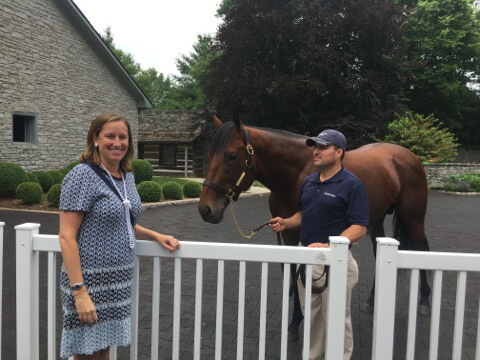
Jen Shah, Dean Dorton’s equine industry team leader, was recently elected to the Thoroughbred Aftercare Alliance (TAA) board of directors. Eight new members were elected, including a new board president. The new board members include representatives of industry organizations such as Darby Dan Farm, Breeders’ Cup, Del Mar Thoroughbred Club, The Jockey Club, Ocala Stud, New York Racing Association, and Persley Den Farms.

TAA accredits, inspects, and awards grants to approved aftercare organizations to retire, retrain, and rehome Thoroughbreds using industry-wide funding. TAA has accredited and provided funding to 64 aftercare organizations across the U.S. and Canada to date.

“I am honored to join the TAA board and look forward to enhancing the financial well-being of an already successful organization. There continues to be a significant need for TAA’s guidance and through the unwavering commitment of TAA’s staff and board members, I believe the TAA’s industry influence will continue to grow as a leading financial provider and supporter of Thoroughbred racehorse retirees and quality aftercare.”

Jen Shah, Director of Tax Services

Jen Shah pictured with American Pharoah

Filed Under: Equine, Industries Tagged With: aftercare, alliance, equine, horse, Jen, Shah, taa, Thoroughbred

Article 11.21.2016 Dean Dorton

By: Jen Shah, Dean Dorton Equine Industry Team Leader

As the December 1, 2016 implementation deadline rapidly approaches, we thought it would be useful to farms to provide some reminders on these new regulations and to illustrate their effect on certain farm managerial, executive, administrative and professional positions. Farms, professionals (myself included!) and even local Department of Labor agents have been confused about interpreting the new rules and applying them to farms.

Earlier this year, we issued an article regarding the potential applicability to farms under the final regulations issued by the US Department of Labor to Part 541, which governs certain executive, administrative and professional positions under the Fair Labor Standards Act (FLSA). A link to that article may be found here:

Federal Overtime Regulations for Thoroughbred Businesses

This article takes a closer look at how the updated Part 541 regulations may impact farms, specifically regarding certain manager-level, executive, administrative or professional farm employees who fall below the new $47,476 salary threshold.

FLSA provides for two categories of employees:

  1. Exempt – Salaried
  2. Non-Exempt – Hourly or Salaried

“Exempt” in this context means “exempt from overtime pay.” In order to be “exempt,” an employee must meet the salary basis test (fixed salary not subject to reduction based on the quality or quantity of work performed), the duties test (refer to our prior article for a more in-depth discussion), AND the salary level test. If any one of these tests is not met, then an employee is “non-exempt.” A non-exempt employee must be paid based on hours worked in the pay period plus overtime at a rate of time and one-half for hours that exceed 40/week. The prior statement ignores the general agricultural exemption under Part 780, which is specifically addressed later in this article.

The salary basis and duties tests did not change upon issuance of the final regulations, but the minimum salary level was increased to $913 per week ($47,476 per year) from $455 per week ($23,660 per year). Therefore, if a person meets the duties test but is paid less than the minimum salary threshold, this employee is treated as “non-exempt” effective December 1, 2016.

By converting a prior exempt-salaried employee to a non-exempt employee, the farm is now required to track actual hours the employee works and to pay at the calculated hourly rate based on these actual hours. This creates issues for both the farm and these farm employees.

So how does the above change from “exempt” to “non-exempt” status interact with the agricultural exemption under Part 780, which is available to qualifying employees who perform duties on the farm? As a reminder, the agricultural exemption was not changed by the updated regulations. Under Part 780, employees who are engaged in agriculture continue to be exempt from overtime pay at time and one-half (although KY law requires overtime to be paid to employees who have worked seven days in any given work week for all hours worked on the seventh day).

The updated regulations merely convert certain previously “exempt” employees to “non-exempt” status, requiring that these employees now be paid based on actual hours worked versus a salary. However, the hours worked in excess of 40 hours/week are only required to be paid based on the calculated hourly rate, not time and one-half, under the agricultural exemption available to qualifying employees under Part 780.

Let’s walk through an example of a broodmare manager who makes $40,000 per year, is paid weekly and works an average of 45 hours per week. Under Part 541, the manager meets the duties test of an executive and, as of November 2016, his salary exceeds the $23,660/year threshold. He currently is treated as an exempt-salaried employee and paid about $760/week ($40,000 per year/52 weeks).

Effective December 1, 2016, the manager does not meet the salary test since his $40,000 salary is less than the newly-established minimum of $47,476. Therefore, this broodmare manager is converted from an exempt-salaried employee to a non-exempt employee.

What does the change in status on December 1, 2016 mean for the farm and the broodmare manager? The farm may address this situation in a variety of ways:

  1. Increase the broodmare manager’s salary to the $47,476 threshold.
    1. Pro – Less administrative burden because tracking hours is not required.
    2. Con – Increased expense for the farm.
  1. Convert to an hourly wage using a 40 hour/work week.
    1. The broodmare manager’s $40,000 salary could be converted to an hourly wage, and the manager would be paid by the farm for the actual hours worked in a week. Conversion to an hourly wage per hour is calculated below for this example:
    2. Salary ($40,000) / (40 hours per week * 52 weeks) = $40,000/2,080 hours = about $19/hour.
    3. Therefore, if the broodmare manager works a 40 hour week, he would be paid about $760 ($19/hour * 40) for that week. If he works 60 hours in one week, he would be paid about $1,140 ($19/hour * 60) for that week.
    4. Pro – Keeps base weekly wage the same for the broodmare manager (with increased pay for weeks where greater than 40 hours are worked).
    5. Con – Increased salary expense for the farm and increased administrative burden for both the manager and the farm to track hours.
  1. Convert to an hourly wage using the average number of hours worked/work week.
    1. The broodmare manager’s $40,000 salary could be converted to an hourly wage, and the manager would be paid by the farm for the actual hours worked in a week. Conversion to an hourly wage per hour is calculated below for this example:
    2. Salary ($40,000) / (45 hours per week * 52 weeks) = $40,000/2,340 hours = about $17/hour
    3. Therefore, if the broodmare manager works a 40 hour week, the pay would be $680 ($17/hour * 40) for that week. If he works 60 hours in one week, he should be paid about $1,020 ($17/hour * 60) for that week.
    4. Pro – Attempts to maintain current salary expense consistent for farm.
    5. Con – Broodmare manager will receive less weekly pay in weeks where 40 hours are worked versus what he received previously (farm may consider a bonus to “true-up” the manager’s salary at intervals throughout the year). Increased administrative burden for both the manager and the farm to track hours.

In short, if you are converting a managerial, executive, administrative or professional farm employee from “exempt” to “non-exempt” status, you are required to pay for actual hours worked in a work week, but are not required to pay at time and one-half rates for hours in excess of 40 as long as the employee qualifies for the general agricultural exemption under Part 780.

Note that a ruling regarding a preliminary injunction to implement these FLSA updates is expected to be issued on November 22, 2016 by a U.S. District Court. Another hearing trial could be set for November 28th if the motion is denied. Stay tuned for news on this ruling; however, in the meantime, it is wise to prepare the farm for the December 1, 2016 implementation of these updated regulations.

Please contact me at jshah@deandortonstg.wpenginepowered.com or your Dean Dorton advisor with any questions regarding the above.

Jen Shah, Equine Industry Team Leader

Filed Under: Accounting & Tax, Equine, Industries Tagged With: DOL, Exempt, horse, Hourly, Labor, Overtime, Regulation, Salary, Thoroughbred, Worker

Article 11.9.2016 Dean Dorton

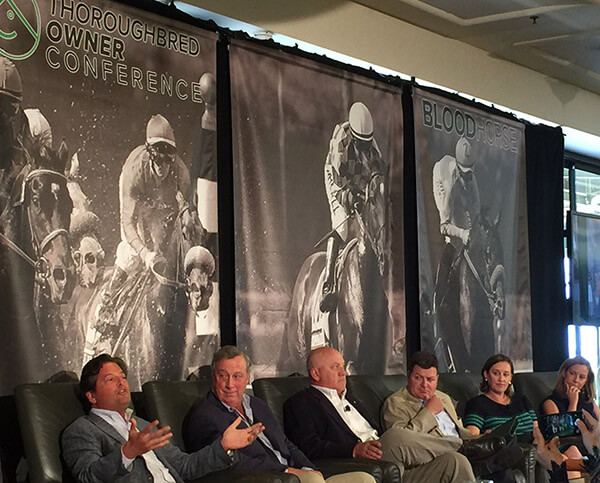
Jen Shah is no stranger to the annual Thoroughbred Owner Conference, hosted by OwnerView. More than 100 aspiring Thoroughbred owners from across the country gathered at California’s Santa Anita Park on October 31 to learn about business considerations for racehorse ownership. Joining Jen on the panel were experienced owners George Bolton and Mike McMahon, trainer Kenny McPeek, bloodstock agent Pete Bradley, and Shannon Arvin, an attorney for Stoll Keenon Ogden.

The key take-aways from the panel were to avoid rushed decisions, spread risk, and have fun while in the game of horse racing. Jen discussed tax issues for Thoroughbred owners and encouraged both current and aspiring owners to consider their ownership enterprise a business rather than a hobby.

Immediately following the Thoroughbred Owners Conference was the thirty-third running of the Breeders’ Cup World Championships, hosting the world’s greatest in the sport of horse racing. Joining Jen was Melissa Hicks, also on Dean Dorton’s equine industry team. Jen and Melissa represented the firm, which was a proud partner of the 2016 Breeders’ Cup.

Filed Under: Equine, Industries Tagged With: Breeder, Breeders' Cup, Conference, Hicks, horse, Jen, Melissa, Racing, Santa Anita, Shah, Thoroughred

Article 06.23.2016 Dean Dorton

The U.S. Department of Labor recently released its final regulations, issuing changes to Part 541, which govern certain overtime exemptions under the Fair Labor Standards Act (FLSA) for executive, administrative, professional, computer, and outside sales employees.

Under current law, certain executive, administrative, and professional employees are exempt from overtime pay if their salary is at least $455 per week ($23,660 per year) and other criteria are met regarding job roles and responsibilities. In addition to the salary requirement noted above, the respective duties for executive and administrative positions are:

  • Executive: Employee’s primary duty must be managing the enterprise (or a department of the enterprise), must regularly direct the work of at least two other full-time employees, and must have the authority to hire or fire employees.
  • Administrative: Employee’s primary duty must be the performance of office or other non-manual work related to management or general business of the employer and includes the exercise of discretion and independent judgment.

Effective December 1, 2016, the exemption from overtime pay for the above positions addressed in Part 541 is applicable if the employee’s salary is at least $913 per week ($47,476 per year). This amount is based on the 40th percentile of the lowest income region of the country, currently the South. Up to 10% of this salary threshold may include certain bonus or incentive payments (including commissions) that are paid at least quarterly.

This salary level will increase automatically every three years to match national wage growth. Note that the final regulations did not make any changes to the duties tests that partially determine whether a position qualifies for an overtime exemption under Part 541.

Personnel in the equine industry who meet these criteria governed by Part 541 may include trainers who train at the racetrack and back office support staff who work with racing or training operations.

Agricultural Exemption
It is important to note that the final regulations did not include any changes to the agricultural exemption addressed in Part 780. Under Part 780, employees who are engaged in agriculture are exempt from overtime pay*. For this purpose, employees engaged in the breeding, raising, and training of horses on farms are considered agricultural employees. Qualifying farm employees may include grooms, foremen, stallion managers, trainers, watchmen, and others directly involved with the care of horses on the farm. In addition to those directly involved with the care of horses, positions that are incidental to or in conjunction with the qualifying farming activities are also treated as agricultural employees. Financial staff, booking secretaries, office support and general maintenance positions that support farm operations qualify.

A significant exclusion from the agricultural designation applies to activities performed by an employee off the farm in connection with racing. A training track at the racetrack is considered off the farm. Special care should be given to track employees’ hours, if significant time is spent off the farm in this capacity.

In summary, since most personnel employed on a thoroughbred horse farm will fall under the agricultural exemption as addressed in Part 780, the newly finalized regulations may have little effect for farms. However, horse racing and training ventures that operate primarily off the farm should consider the impact of these new rules.

* Kentucky law requires overtime be paid to employees who have worked seven days in any given work week for all hours worked on the seventh day.

Contact your Dean Dorton advisor or Jen Shah at jshah@deandortonstg.wpenginepowered.com for more information.

View Jen Shah’s Bio

Filed Under: Equine, Industries Tagged With: equine, Farm, federal, FLSA, horse, Overtime, Racetrack, Thoroughbred, Track, Trainer

Article 05.9.2016 Dean Dorton

Elizabeth Woodward and Nick Lynch recently presented on fraud risk considerations at the University of Kentucky’s National Conference on Equine Law. They covered top 10 considerations specific for equine clients and operations:

  1. Horse farms are often controlled by high net worth absentee owners. Ensure proper controls are in place to mitigate fraud risk in their absence.
  2. Farm management is often passionate about horses, but may lack financial sophistication. Make sure they are treating the farm like a business and implementing proper internal controls.
  3. Employees at farms (and related family offices) may develop a sense of entitlement that allows them to rationalize fraud based on the farm owner(s) lifestyle. (e.g., I give everything to this farm. Why shouldn’t I enjoy a higher lifestyle? They won’t miss the money anyway.) Be aware that this increases the risk of fraud.
  4. Farms may rely on a single employee or small group of employees for all accounting functions. Ensure duties are properly segregated, especially within the cash receipt and disbursement processes.
  5. There sometimes is a lack of transparency in syndicate expenses. Ensure that expenses are being segregated and billed appropriately. Syndicate managers and members should exercise due diligence to see that only appropriate expenses are being captured and billed.
  6. An ethical culture is the cornerstone of a strong internal control environment. Management must set the tone; employees will tend to follow their lead.
  7. Develop proper purchasing procedures, including authorizations, approval thresholds and strong bidding practices.
  8. Credit card usage is a common area of abuse and should be limited to necessary situations. Most expenses should follow the normal check disbursement or expense reimbursement (e.g., travel expenses) processes.
  9. Horse farms often lack formal policies and procedures. Develop formal policies and require employees to review and acknowledge them.
  10. Tips are the most likely source of fraud detection. Consider an ethics hotline to facilitate tips.

Three Themes:

  1. Absentee Owners
  2. High Wealth Families
  3. Passion for Industry

For more information, contact Elizabeth Woodward at ewoodward@deandortonstg.wpenginepowered.com or Jen Shah at jshah@deandortonstg.wpenginepowered.com.View Elizabeth Woodward’s BioView Jen Shah’s Bio

Filed Under: Equine, Forensic Accounting, Industries, Services Tagged With: Elizabeth Woodward, equine, fraud, horse, industry, jen shah, Risk, wealth

  • Services
    • Outsourced Accounting
    • Audit & Assurance
    • Tax
    • Consulting & Advisory
    • Technology & Cybersecurity
    • Family Office
    • Wealth Management
  • Industries
  • Company
  • Locations
  • Careers
  • Insights
  • Events
  • Contact Us
facebook Dean Dorton - CPAs And Advisors On Facebook twitter twitter linkedin Dean Dorton - CPAs And Advisors On LinkedIn youtube Dean Dorton - CPAs And Advisors On YouTube

The matters discussed on this website provide general information only. The information is neither tax nor legal advice. You should consult with a qualified professional advisor about your specific situation before undertaking any action.

© 2026 Dean Dorton Allen Ford, PLLC. All Rights Reserved